An ESL Valentine’s Day activity can be a useful way to explore culture, communication, and relationships with teen and adult learners—without awkward or overly romantic content.
When used thoughtfully, Valentine’s Day works well as a classroom theme for practising reading, speaking, vocabulary, and real-life communication in a way that feels relevant and appropriate.
Below are 10 practical ESL Valentine’s Day activities, combining ready-to-use lessons with low- and no-prep ideas you can adapt to different levels and teaching contexts.
Valentine’s Day is celebrated in many countries around the world, though traditions and attitudes towards it vary widely (source).
1. ESL Valentine’s Day Activities: Reading-Based Lessons
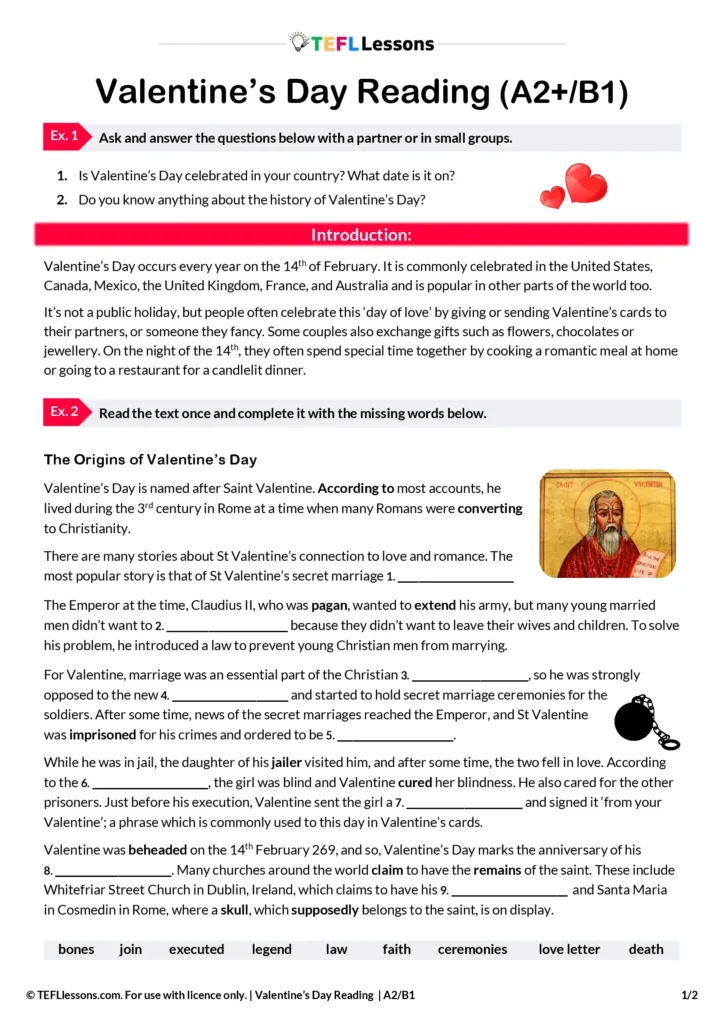
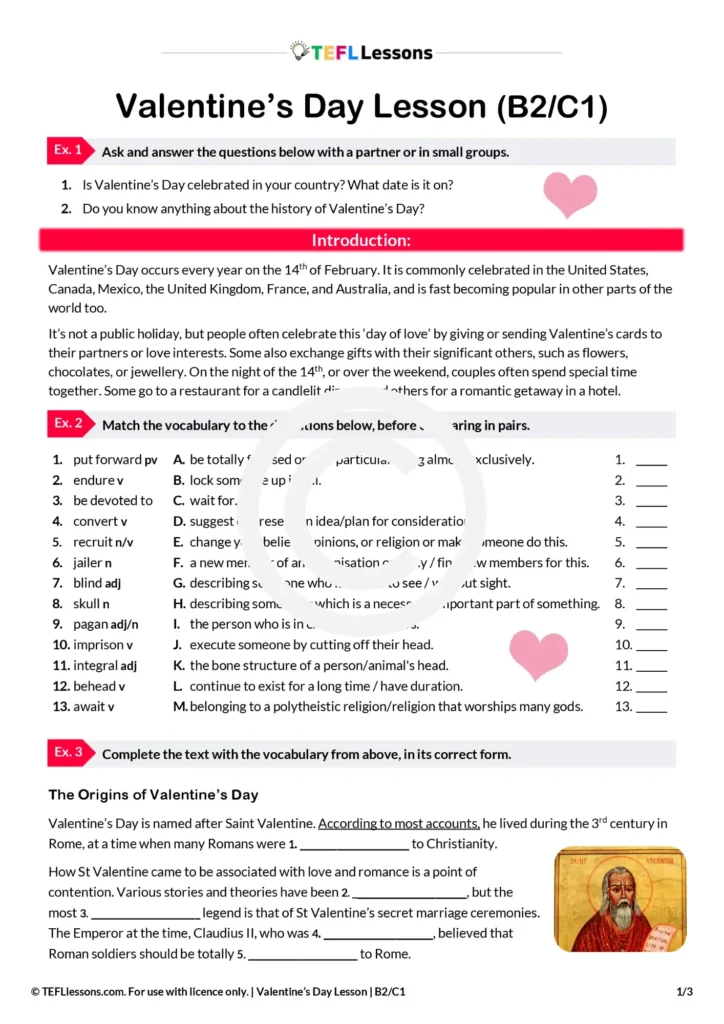
Valentine’s Day works well as a cultural reading topic, especially at A2–B1 and above. Lessons can explore:
- the origins of Valentine’s Day
- how it is celebrated today
- whether learners see it as romantic, commercial, or both
This type of lesson naturally leads into opinion-based discussion and works well as a stand-alone reading or as part of a themed lesson.
You can explore the history, traditions, and modern meaning of Valentine’s Day through reading-based lessons such as Valentine’s Day English Lesson (B2–C1), Valentine’s Day English Lesson 2 (A1–A2), and Valentine’s Day Reading (A2–B1).
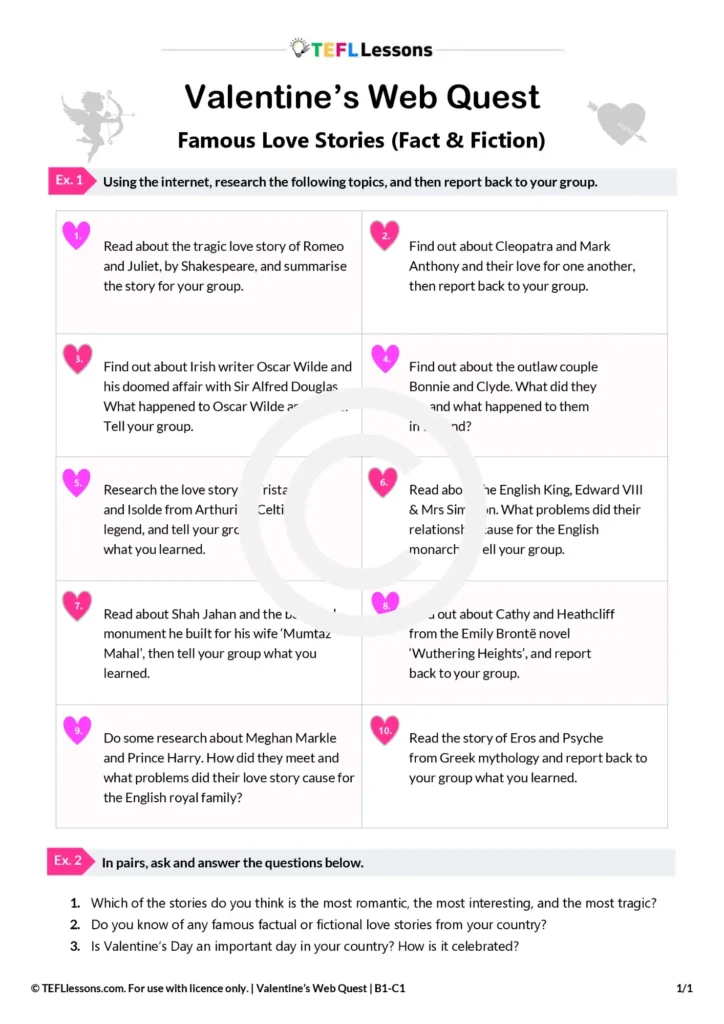
2. Research & Speak: Famous Love Stories (WebQuest)
A WebQuest-style task encourages independent research and extended speaking. Students can research:
- famous couples
- historical or fictional love stories
- Valentine’s Day traditions in different countries
Learners then summarise their findings and discuss them with the class.
For a ready-made research task, try our Valentine’s Day ESL WebQuest, which guides learners through independent research and structured speaking tasks.
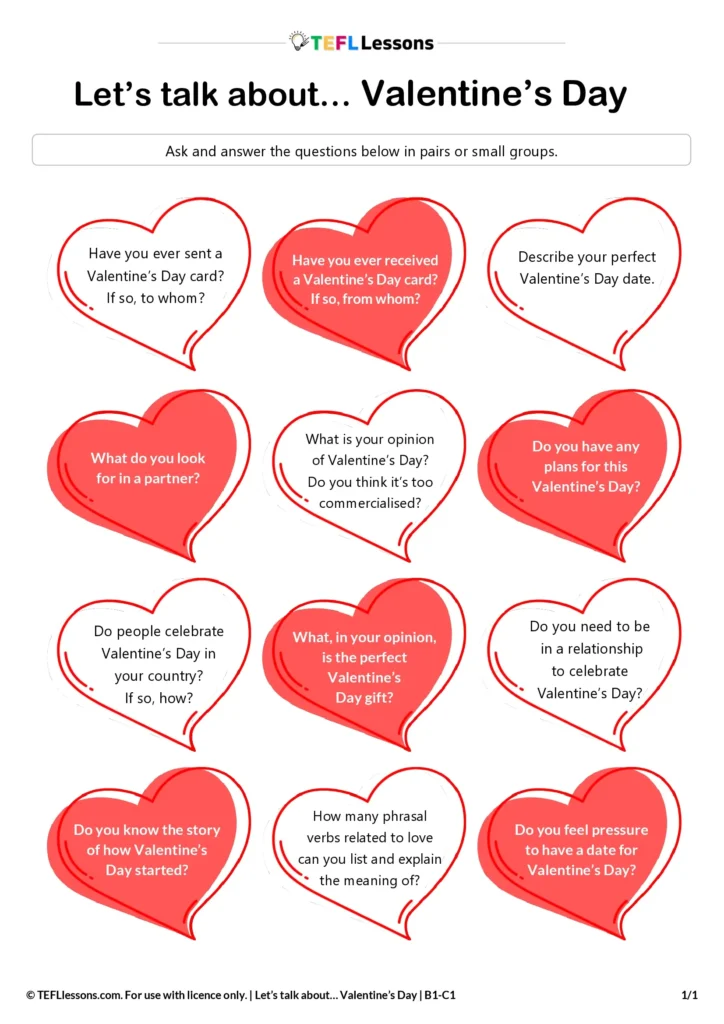
3. Conversation Questions: Talking About Valentine’s Day
Structured conversation questions help students talk about Valentine’s Day without putting pressure on personal disclosure. Topics might include:
- attitudes to Valentine’s Day
- friendship vs romance
- cultural differences
This works well as:
- a full speaking lesson
- a warm-up before reading or vocabulary work
A dedicated speaking lesson such as the Valentine’s Day Speaking Activity works well for guiding discussion in a supportive, structured way.
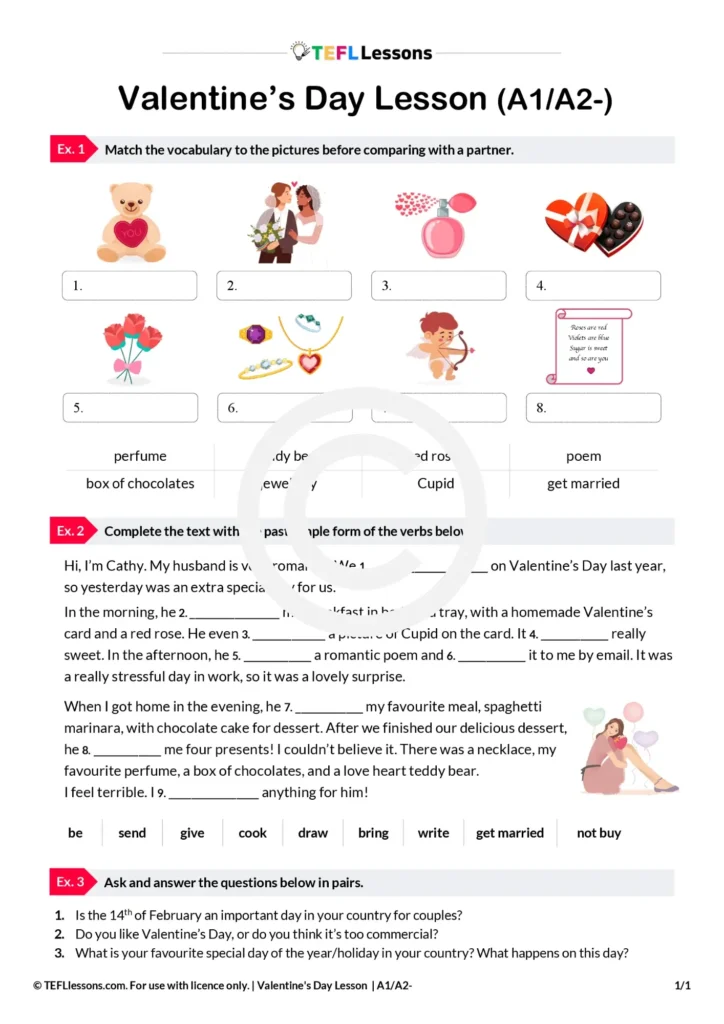
4. Image Matching & Tense Practice (A0–A2)
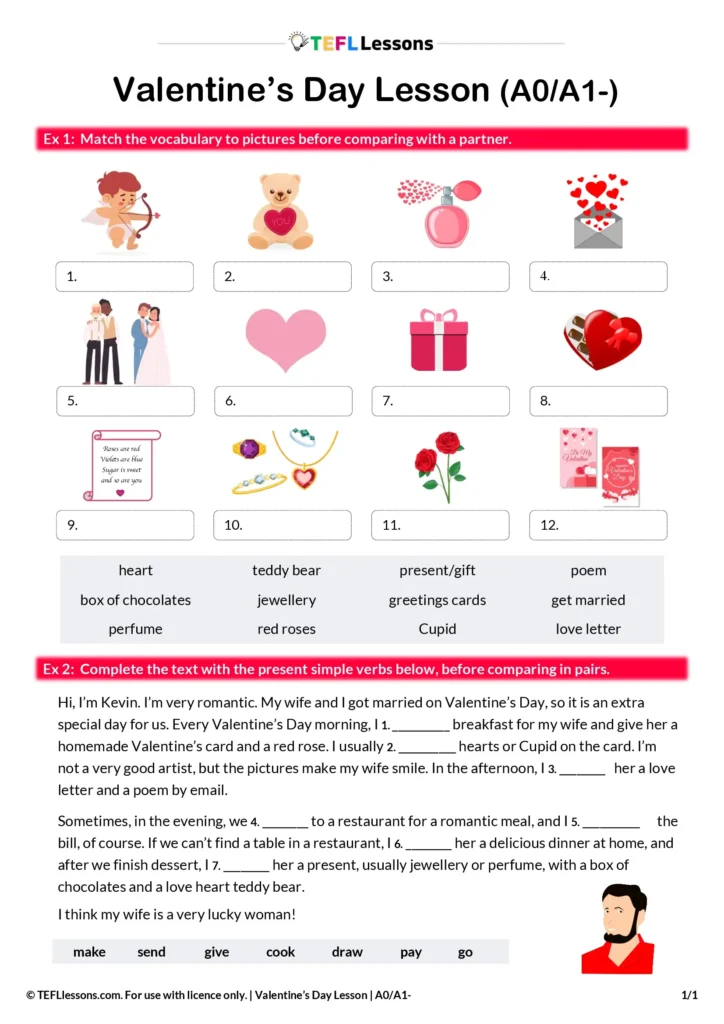
For lower levels, Valentine-themed images can be used to:
- introduce or revise key vocabulary
- practise present simple or present continuous
- build short, controlled sentences
This keeps the focus on language practice, not the theme itself.
For lower levels, you can use visual, scaffolded lessons such as the Valentine’s Day Vocabulary Worksheet (A0–A1) and Valentine’s Day English Lesson 2 (A1–A2).
5. Idioms About Love & Relationships
Love and relationship idioms are ideal for B1+ learners when taught in context, not as a list. Focus on:
- meaning and usage
- example sentences
- controlled personalisation
Common idioms include head over heels, tie the knot, and love at first sight.
A focused lesson such as Love and Relationships Idioms helps learners understand and practise common idioms in context.

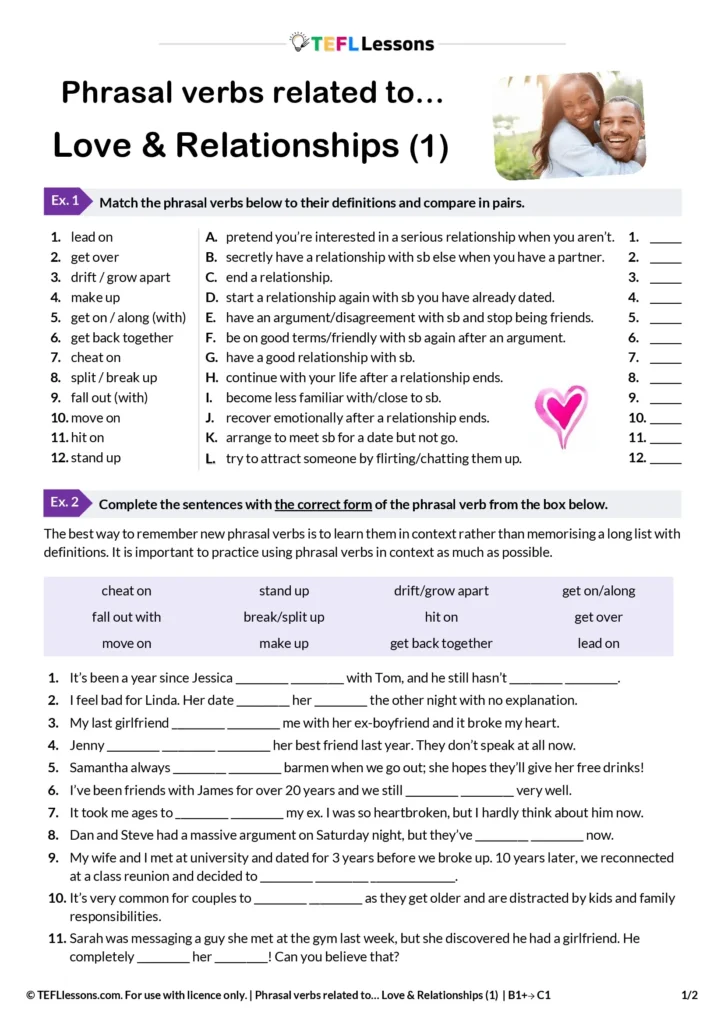
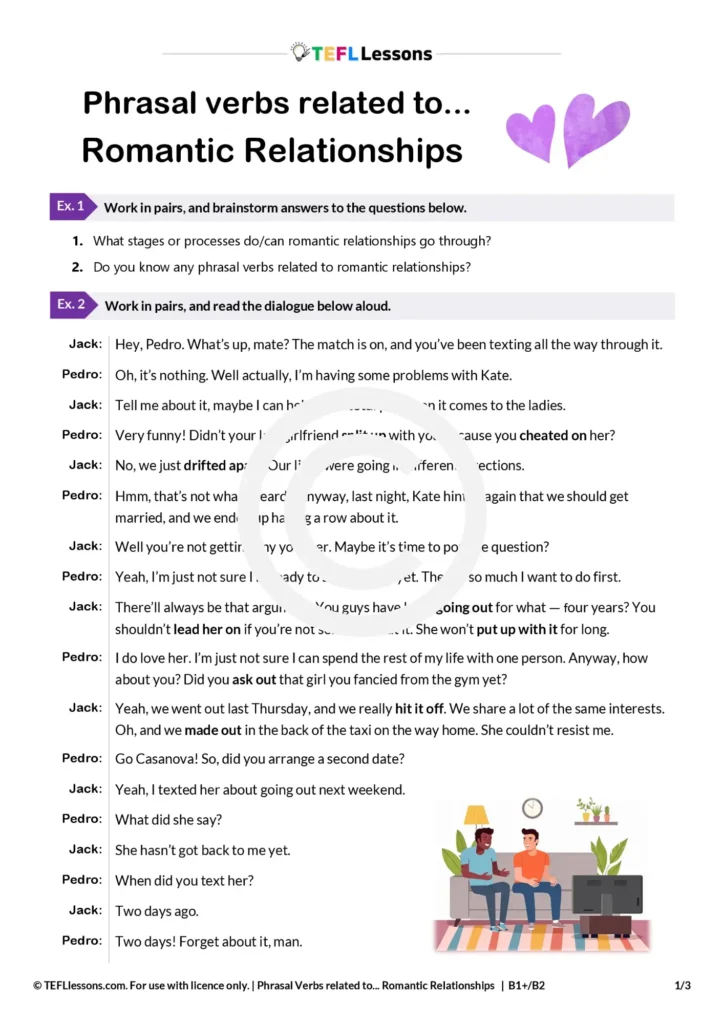
6. Phrasal Verbs About Love & Relationships
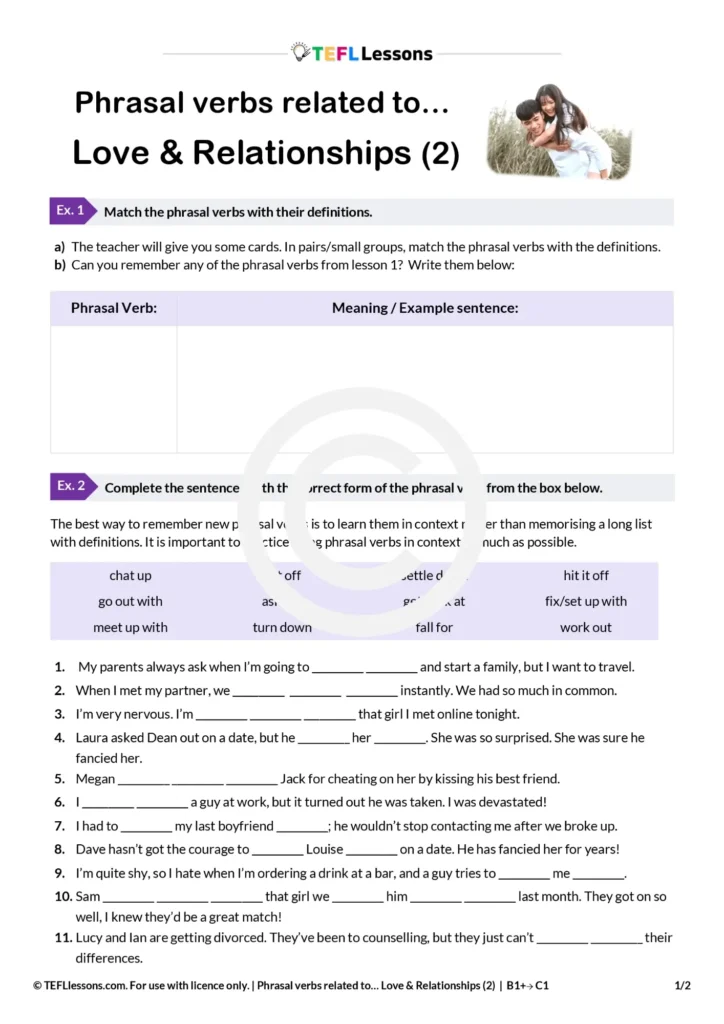
Relationship-related phrasal verbs are high-frequency and practical, especially at B1–B2+. Typical verbs include:
- fall for
- break up
- get along
These work best through short texts, gap-fills, and speaking tasks rather than memorisation.
You can build this around targeted lessons such as Love Phrasal Verbs Practice, Relationships Phrasal Verbs, and Romance Phrasal Verbs.
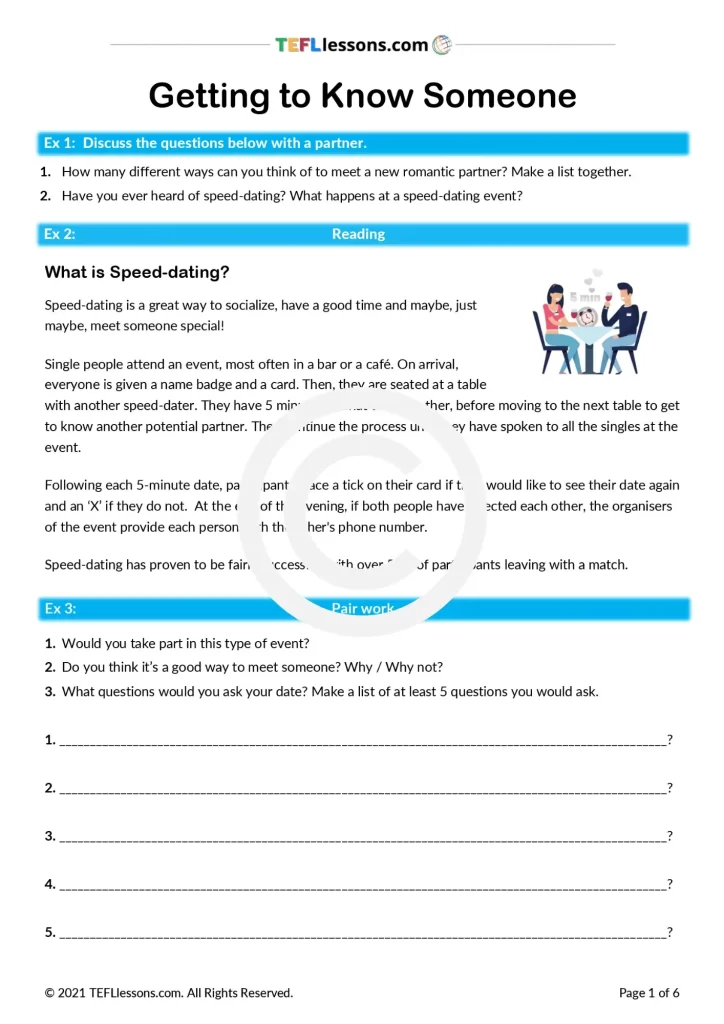
7. Role Plays: ESL-Friendly Speed Dating
Speed dating activities help students practise:
- asking follow-up questions
- reacting naturally
- keeping conversations going
To keep it classroom-safe, use neutral topics such as hobbies, travel, or daily routines rather than romantic scenarios.
To support this activity, you can also use the Language for Getting to Know Someone lesson to practise asking and responding naturally.
8. Writing a Valentine’s Poem (With Scaffolding)
Creative writing tasks work best with clear scaffolding. Provide:
- a fixed model
- sentence starters
- limited vocabulary
For example:
You are…
You make me feel…
I like you because…
This keeps the task accessible from A1–B1 and avoids free-writing overload.
9. Valentine’s Opinion Lines (Agreeing & Disagreeing)
Write a statement on the board and ask students to stand along a line from strongly agree to strongly disagree. Students then explain and defend their position using agreeing and disagreeing language.
This works particularly well after revising functional language for polite disagreement.
Suggested topics:
- Age-gap relationships are socially acceptable.
- There should be a legal minimum age for marriage everywhere.
- Valentine’s Day puts too much pressure on relationships.
- Long-distance relationships rarely work.
- Marriage is no longer important in modern society.
For useful functional language to support these debates, check out our Language for Discussions (B1) and Language for Discussions lessons.
10. Relationship Advice Cards (Giving Advice)
Write a short relationship or friendship problem on the board. Students give advice using structures such as:
- should / shouldn’t
- If I were you…
- Why don’t you…
Situations you can use:
- Someone feels their partner doesn’t listen to them.
- Someone’s friends dislike their partner.
- Someone argues too much in relationships.
- Someone wants to break up but feels guilty.
- Someone’s family disapproves of their relationship.
To support this task, you can use our Language for Giving Advice, Asking for and Giving Advice, and Should / Shouldn’t Lesson.