Earth Day is a great opportunity to explore environmental topics in the ESL classroom, but these lessons can also be used all year round. Teaching environment vocabulary in ESL helps students talk about real-world issues while building confidence in speaking and listening.
This collection of environment vocabulary ESL activities is designed for teens and adults. It includes ready-to-use lessons on climate change, nature, animals, and global issues, making it easy to bring engaging and meaningful topics into your classroom.
This collection brings together a range of engaging environment vocabulary ESL activities, nature-based lessons, and animal-themed resources for teens and adults. These activities help students build strong environment vocabulary in English while developing speaking and listening skills through real-world topics.
Nature and Environment ESL Activities for the Classroom
These lessons help students build vocabulary, improve speaking and listening skills, and explore real-world environmental topics. They are ideal for teens and adult learners and can be used throughout the year, not just for Earth Day.
🌍 Environment & Global Issues
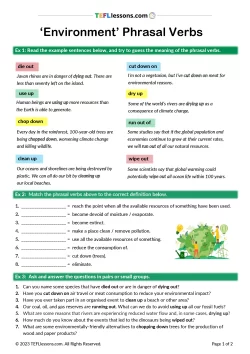
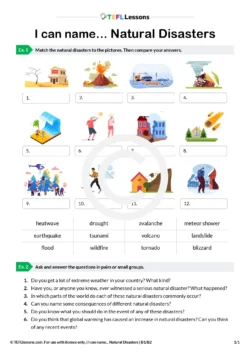
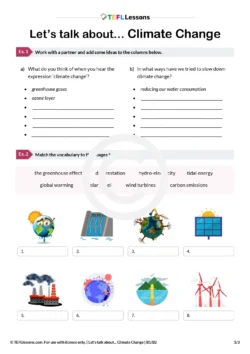
This set focuses on key environmental topics such as climate change, natural disasters, and useful topic-based language. These lessons work well for discussion-based classes and help students express ideas about global issues.
🌿 Nature Vocabulary & Activities
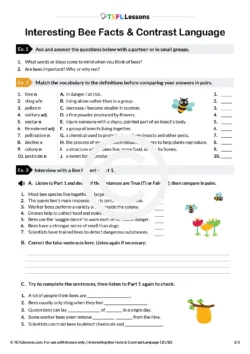
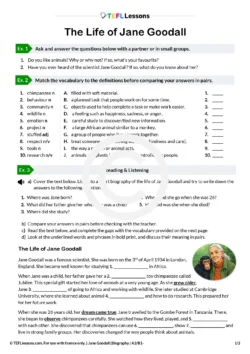
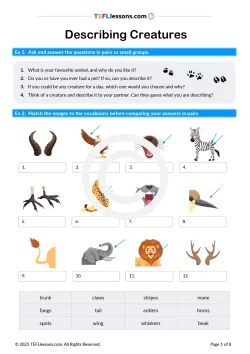

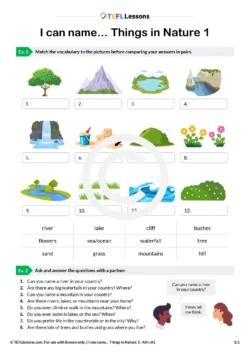
These activities help students describe the natural world and build essential vocabulary through engaging tasks. This section also includes a listening-focused lesson on Jane Goodall, adding an inspiring real-world perspective to the topic.
These lessons are ideal for teaching nature vocabulary ESL topics and helping students describe the natural world with confidence.
🐾 Animal Vocabulary & Topics
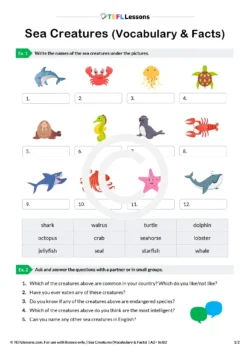


Animal-themed lessons are always engaging for ESL learners. These animals ESL activities help build vocabulary, encourage discussion, and develop students’ confidence when describing familiar topics.
How to Make Your ESL Lessons More Environmentally Friendly
Teaching environmental topics can also be a good opportunity to reflect on how materials are used in the classroom. Small changes can help reduce waste while keeping lessons practical and effective.
1. Use digital worksheets where possible
Using digital materials is one way to reduce paper use. Many ESL lessons can be shared online or completed on a device, making them flexible for both in-person and online teaching.
2. Reuse materials with different classes
Activities such as card games, matching tasks, and discussion prompts can often be reused across multiple groups. Keeping resources organised makes it easier to use them again without extra preparation.
3. Laminate resources for long-term use
Laminating frequently used materials can help them last longer and reduce the need for repeated printing. This is especially useful for lessons you teach regularly.
4. Print only when necessary
Not every activity needs to be printed. Some tasks can be completed orally, displayed on a screen, or adapted for pairwork and group work. When printing is needed, using double-sided or reduced-size printing can help save paper.
5. Extend activities instead of printing more
Many ESL activities can be expanded into speaking, writing, or follow-up tasks. Using one resource in multiple ways can reduce the need for additional materials while giving students more practice.
Try These Environment Vocabulary ESL Activities in Your Class Today
If you are looking for practical and engaging ways to teach environmental topics, these lessons can help you save preparation time while giving students meaningful language practice. Whether you are planning an Earth Day lesson or teaching these topics at another time of year, this collection offers a wide range of ready-to-use resources for teens and adults.
You can explore more at TEFL Lessons, where you’ll find hundreds of ESL materials for speaking, vocabulary, grammar, and discussion.
For best results when printing our PDFs, open and print them through Adobe Acrobat Reader.