Describing Faces
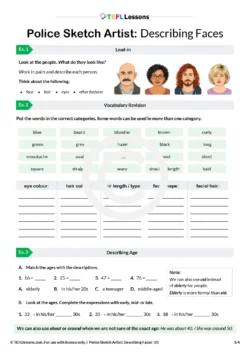
somdn_product_pageThis describing faces worksheet helps B1 learners develop the vocabulary and language they need to describe faces and facial features. Students revise key descriptive vocabulary, learn more specific features, practise pronunciation and use the language in an engaging police sketch artist speaking task.
Level: B1
Time: 90 minutes+
This lesson comes with:
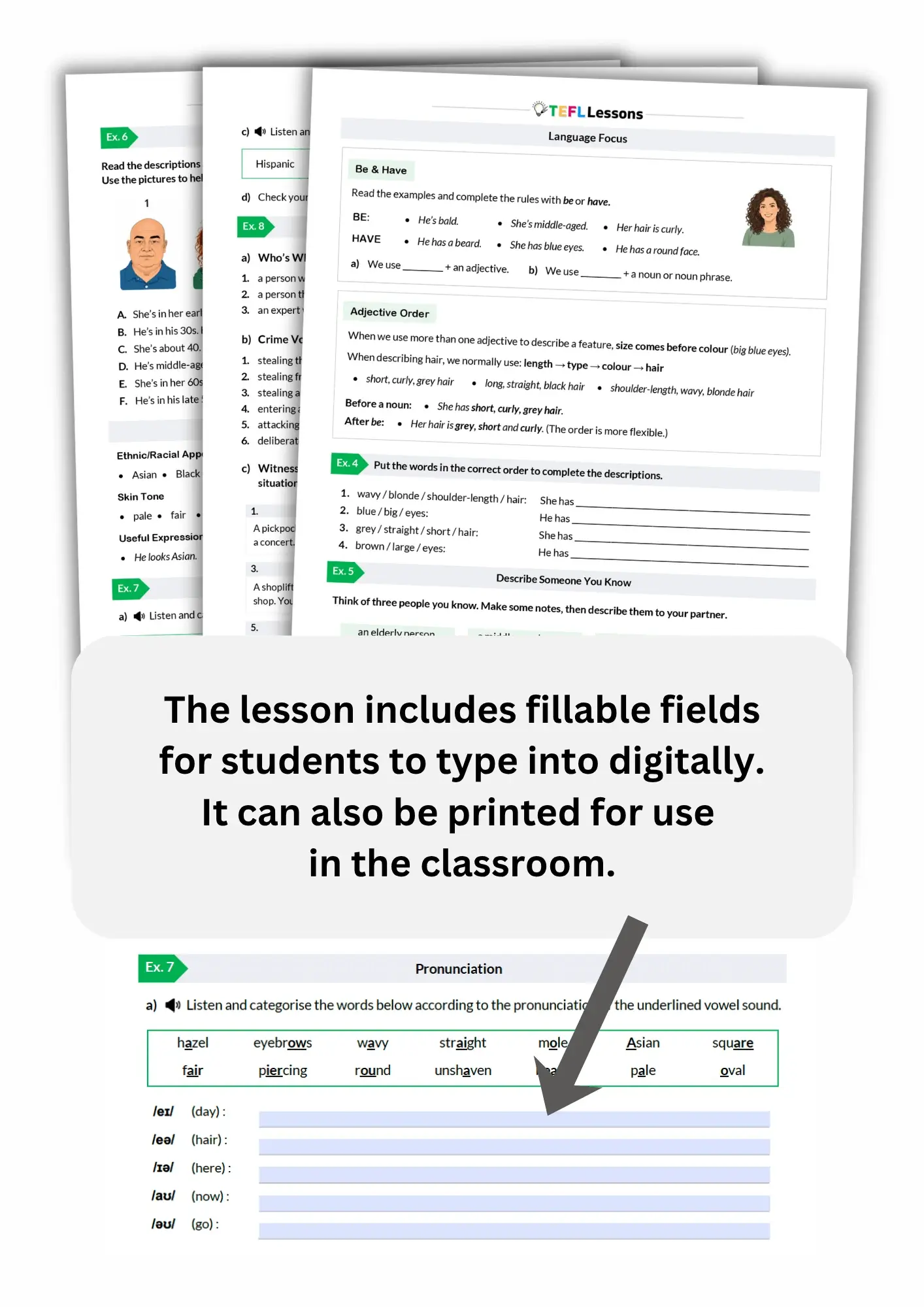
Fillable Fields – This digital worksheet can be completed online or printed.
Listening Materials – Includes audio files for pronunciation practice.
Teacher’s Copy – Includes detailed teacher’s notes and an answer key.
Student Version – Ideal for sharing via email for online lessons.
Describing Faces Worksheet – Overview
1. Describing People Vocabulary
Students revise useful vocabulary for describing eye colour, hair colour and type, face shape and facial hair. They also practise language for describing age and review the use of be and have.
2. Adjective Order
Students review adjective order when describing physical features, including the usual order for describing hair, before completing a short practice activity.
3. Describing Facial Features
Students learn more detailed physical description vocabulary, including freckles, eyelashes, nose piercing, scar, tattoo, receding hairline, mole, wrinkles, full lips, double chin and bushy eyebrows. They also look at useful language for ethnic/racial appearance and skin tone.
4. Pronunciation
Students practise the pronunciation of key vocabulary from the lesson, focusing on vowel sounds and word stress.
5. Crime and Witness Vocabulary
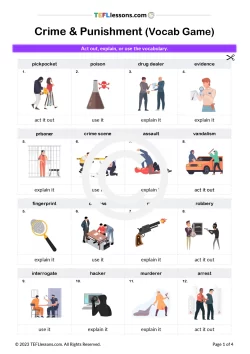
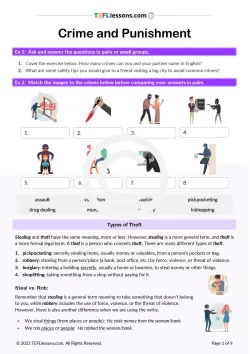
Students learn useful language connected with witnesses, suspects and police sketch artists, as well as common crimes including pickpocketing, shoplifting, burglary, mugging, car theft and vandalism.
6. Police Sketch Artist Speaking Task
Students work in groups and take turns being a witness, police officer and police sketch artist. The witness describes a suspect, the police officer asks for more detail and the sketch artist listens and draws the suspect before the group compares the finished sketch with the original picture.
Skills Developed
Speaking, listening, vocabulary development, pronunciation and descriptive language.
Lesson Objectives
By the end of the lesson, students will be better able to describe faces and specific facial features, use descriptive adjectives in the correct order, pronounce key vocabulary accurately and give and understand detailed descriptions of people.
Try this describing faces worksheet in class today!
Note: This lesson includes printable and fillable field worksheets. For best results, we recommend using the free Adobe Acrobat Reader.
You may also like…
Our Reviews

Full Access Subscription (Auto-Renew)


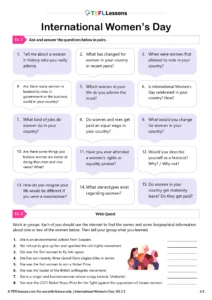
International Women's Day ESL Lesson

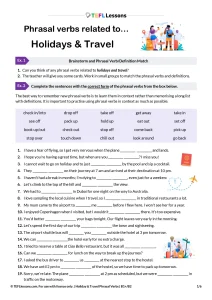
Holiday and Travel Phrasal Verbs
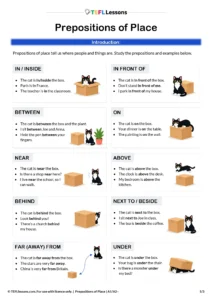
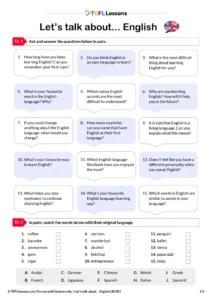
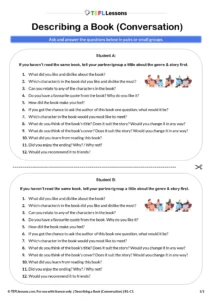
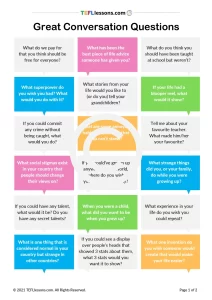
Great Conversation Questions 1


Full Access Subscription (Auto-Renew)
International Women's Day ESL Lesson
Holiday and Travel Phrasal Verbs
Great Conversation Questions 1