January is a natural point to re-engage students in the ESL classroom, but it often calls for a different approach than the start of a new academic year. After a break, learners usually benefit from familiar topics, structured speaking, and light review rather than jumping straight into new material.
That’s why New Year ESL activities work so well at this time of year. They provide ready-made discussion points, practical language practice, and low-pressure ways to get students talking again, while still feeling relevant and purposeful. For many teachers, New Year ESL activities offer a practical way to restart lessons without pressure.
In this post, you’ll find a curated selection of New Year–themed ESL activities, followed by practical January topics, speaking activities to rebuild fluency, and review ideas that help ease classes back into English and set a positive tone for the weeks ahead.
🎉 New Year ESL Activities: Resolutions, Goals & Discussion Topics
The start of the calendar year is a great opportunity to focus on reflection, goals, and future plans in the ESL classroom. New Year resolutions are familiar to most learners and naturally lead to meaningful speaking practice, vocabulary development, and light reading tasks — without overwhelming students in the first weeks back.
Below are some ready-to-teach New Year ESL activities, organised by level to help you choose what works best for your class.
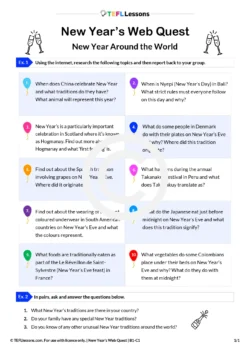
New Year ESL WebQuest (B1–B2)
A discovery-based activity where students explore New Year traditions, resolutions, and cultural practices while developing reading, research, and discussion skills.
Best for: project work, pair/group tasks, or blended learning.
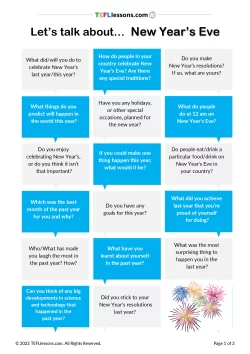
ESL New Year Conversation Questions (A2–C1)
A flexible set of discussion prompts that encourage students to talk about goals, habits, plans, and reflections on the past year.
Best for: warmers, fluency practice, mixed-level classes, or early January lessons.
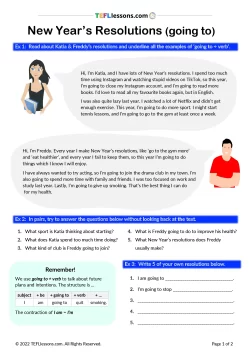
Going To – Reading Comprehension (A1–A2)
A reading-based lesson focusing on going to for future plans, making it ideal for discussing resolutions and intentions. Includes comprehension questions followed by personalised speaking tasks.
Best for: reinforcing future forms in context.
New Year Idioms ESL Activity (B1–C1)
New Year Idioms ESL Activity
is an engaging way to introduce idioms and expressions connected to fresh starts, change, and new beginnings. It helps learners sound more natural and confident when discussing goals.
Best for: vocabulary-focused speaking lessons or follow-up activities.
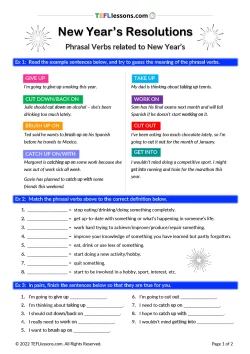
Phrasal Verbs for New Year’s Resolutions (B1–B2)
A themed lesson that practises common phrasal verbs through the context of New Year goals and lifestyle changes.
Best for: extending vocabulary work after a discussion lesson.
🧧 Cultural Extension: Chinese / Lunar New Year (B1–B2)
Chinese / Lunar New Year ESL Lesson
is a culturally focused lesson exploring Lunar New Year traditions, symbols, and celebrations. This works well as a comparison activity and can be used any time in late January or February, depending on the year.
Best for: adding variety and intercultural awareness while staying within the New Year theme.
📌 Real-Life January Topics: Shopping & Health
January is a good time to shift from purely seasonal themes to everyday topics students are already dealing with in real life. Lessons based on shopping and health feel natural at this point in the year and work particularly well once classes are back into a steady rhythm.
Shopping & January Sales
Post-holiday sales make shopping a familiar and engaging topic for many learners. Shopping-based lessons allow students to practise functional language, vocabulary, and idiomatic expressions linked to real situations.
Health, Fitness & Illness
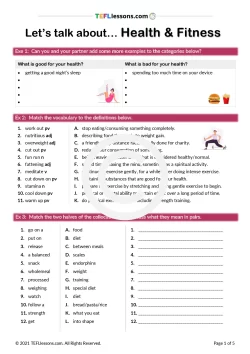
Health-related topics are particularly appropriate in January, when many people are thinking about fitness, wellbeing, and dealing with seasonal illnesses.
❄️ Seasonal Language: Winter Idioms
Winter-themed idioms are a simple way to extend January lessons without introducing new grammar.
-
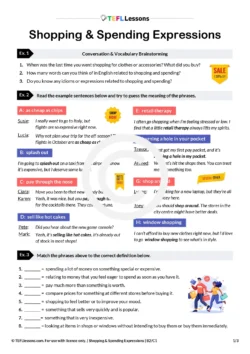 PREMIUM
Shopping & Spending Expressions
LEVEL: B2-C1
-
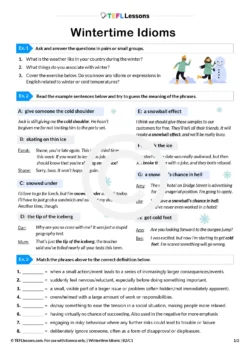 PREMIUM
Wintertime Idioms
LEVEL: B2-C1
-
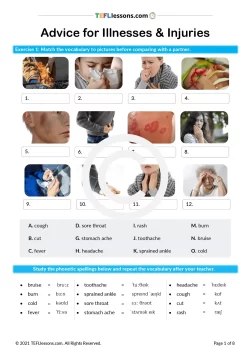 PREMIUM
Advice for Illnesses & Injuries
LEVEL: A2-B1
-
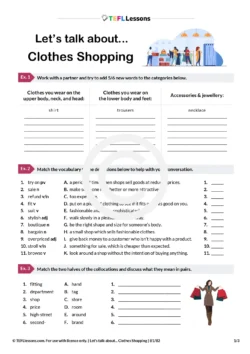 PREMIUM
Clothes Shopping
LEVEL: B1-B2
-
 PREMIUM
Clothes Vocabulary (A2-B1)
LEVEL: A2-B1
-
 PREMIUM
Health and Fitness
LEVEL: B1-B2
-
 PREMIUM
Illnesses & Injuries
LEVEL: B1-B2
-
 PREMIUM
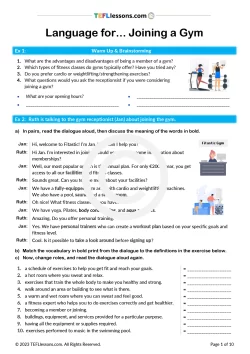
Language for… Joining a Gym
LEVEL: B2/C1-
💬 New Year Speaking Activities: Get Them Talking Again
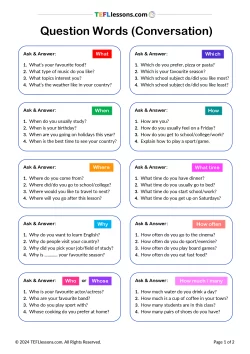
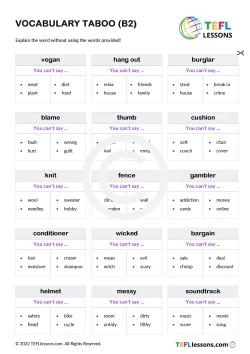
After the holidays, many students need low-pressure speaking practice to restore fluency and confidence. These activities are easy to run, require minimal preparation, and work well in the first lessons back.


🔁 Review & Consolidation Activities: Grammar, Vocabulary & Key Structures
After the holiday break, many teachers choose to spend some time reviewing and consolidating familiar language before moving on with new material.
Review work in January often focuses on core grammar and tense contrasts that students have studied before but may feel less confident using after time away from English.
- Present simple practice
- Past continuous review
- Conditionals (e.g. second conditional)
- Key tense contrasts (e.g. present perfect vs past simple)
-
 FREE
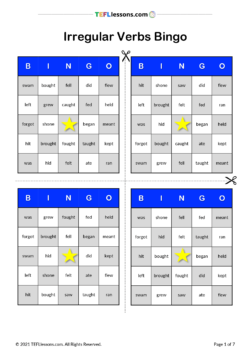
FREEIrregular Verbs Bingo
LEVEL: A1-A2
-
 PREMIUM
A2 Grammar Review Game
LEVEL: A2-B1
-
 PREMIUM
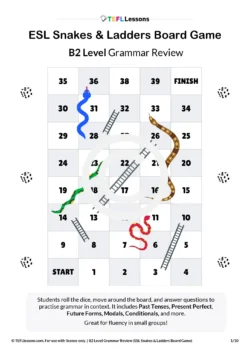
B2 Grammar Review Game
LEVEL: B2-C1
-
 PREMIUM
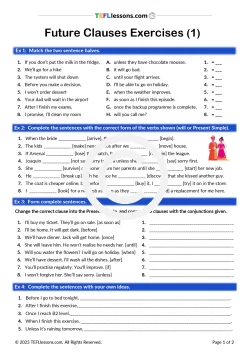
Future Clauses Exercises (1)
LEVEL: B1
-
 PREMIUM
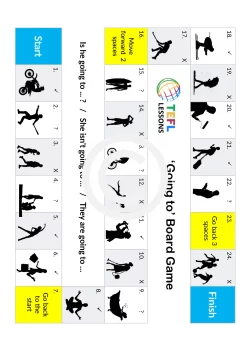
Future Tense Game
LEVEL: A1
-
 PREMIUM
Mixed Tenses & Modals (Speaking Task)
LEVEL: A1-A2
-
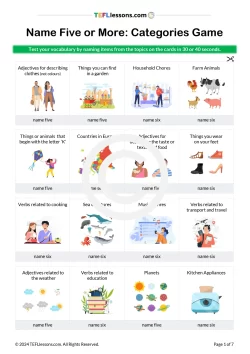 PREMIUM
Name Five: Vocabulary Game
LEVEL: B1-B2
-
 PREMIUM
Past Continuous Exercises
LEVEL: A2-B1
-
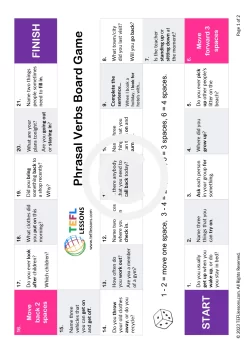 PREMIUM
Phrasal Verbs Board Game
LEVEL: A1-A2
-
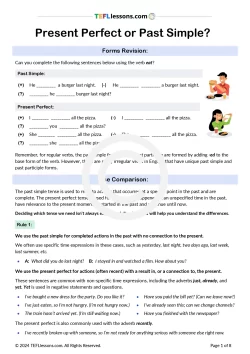 PREMIUM
Present Perfect or Past Simple?
LEVEL: B1-B2
-
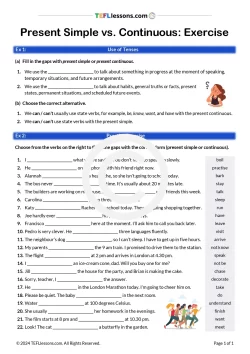 PREMIUM
Present Simple vs. Continuous: Exercise
LEVEL: A0-A1
-
 FREE
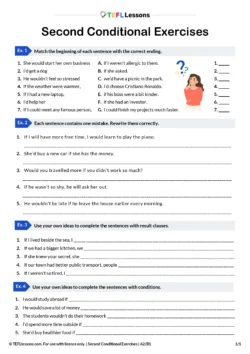
FREESecond Conditional Exercises
LEVEL: A2-B1
Conclusion
January is an ideal time to re-engage learners through familiar, relevant themes and low-pressure activities that set a positive tone for the rest of the course. With materials clearly labelled by level in line with CEFR guidelines, it’s easy to select activities that suit your class and plan the next stage of learning with confidence.